
AI Book Cover Success Stories: Real Results for Authors
In the world of self-publishing, the first thing a reader sees is not your plot or your prose. It is your cover. For many independent writers, this creates a major hurdle. You have spent months or even years writing your masterpiece. But how do you ensure people actually click on it? Do you know how much a professional cover affects your sales?
A great cover acts as a silent salesman. It tells the reader the genre, the mood, and the quality of the work before they read a single word. Historically, getting a high-quality design meant spending hundreds of dollars. It also meant waiting weeks for a human designer. However, tools like BookCoverDesign.ai are changing the game. By using advanced AI, authors are now achieving "bestseller" looks in minutes. In this article, we will explore real-world success stories where authors used AI to transform their publishing careers.

How Professional Book Covers Transformed These Authors' Careers
The transition from a struggling writer to a successful author often hinges on presentation. Many authors attempt to design a book cover themselves using basic software. Unfortunately, their sales often remain flat. When they switch to a professional, AI-optimized design, the results are often immediate and dramatic.
The Sarah Chen Phenomenon: From First-Time Author to Bestseller
Sarah Chen was a debut novelist with a hauntingly beautiful literary fiction manuscript. Like many first-time authors, she was on a tight budget. Her initial attempt at a cover was a simple photo with some basic text. Readers simply passed it by because the cover looked "amateur."
Sarah decided to try our tool to create something more aligned with modern market trends. She chose the "Minimalist Elegance" style and described her book’s themes of memory and loss. The AI generated a striking, symbolic cover that looked like it belonged on a shelf in a high-end bookstore. Within three weeks of updating her cover on Amazon, her daily downloads tripled. Sarah's story proves that even the best writing needs a professional "face" to be discovered.
David Miller's Sci-Fi Revolution: Cover Design That Doubled Sales in Six Months
David Miller writes fast-paced science fiction. In the sci-fi genre, readers expect very specific visual cues. These include neon lights, futuristic technology, or vast starships. David had been using a traditional designer, but the process was slow. He wanted to launch a new series but could not wait two months for the artwork.
David turned to an AI book cover generator to speed up his workflow. He used the "Illustration and Pop Art" setting to create a series of cohesive covers for his trilogy. The AI understood sci-fi market conventions. It produced vibrant, high-resolution images. These covers signaled "epic adventure" to browsing readers. David had professional covers ready for his entire series at launch. This strategy doubled his expected sales revenue within just six months. He reinvested those savings into his marketing budget, further fueling his success.
Laura Jones' Non-Fiction Breakthrough: Creating Authority Through Visual Impact
For non-fiction authors like Laura Jones, a cover is about more than just beauty. It is about authority. Laura wrote a book on productivity, but her original cover felt too "busy." It lacked a sense of trust. In the non-fiction market, if a cover looks disorganized, readers assume the advice inside is disorganized too.
Laura used BookCoverDesign.ai to find a cleaner, more authoritative look. She focused on bold typography and a limited color palette. The result was a cover that looked expensive and expert-led. By using a professional book cover design created by AI, Laura noticed an increase in invitations for podcast interviews and guest speaking roles. People were finally taking her brand seriously because her book looked the part.
The Design Elements That Made a Difference
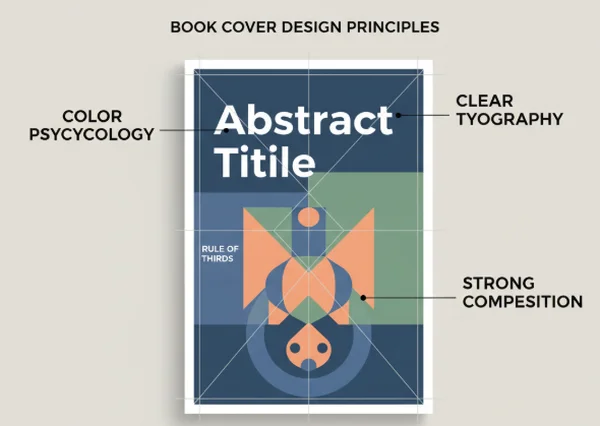
What exactly makes these AI-generated covers so successful? It is not just about "pretty pictures." Effective book cover design relies on several psychological and technical principles. Our AI is trained to understand these deeply. When you start your design, the system applies these rules automatically to ensure your book stands out.
Color Psychology and Its Impact on Reader Attraction
Color is the first thing the human brain processes. Different colors trigger different emotions. For example, deep blues and greens often suggest mystery or thriller genres. Conversely, bright yellows and pinks are staples of contemporary romance.
Our AI analyzed thousands of top-selling books to understand these patterns. When an author selects a "Cover Color Theme," the AI ensures the colors complement each other. It also ensures they fit the intended mood. Using the right color psychology can increase a book's "click-through rate" significantly. If a reader is looking for a "cozy mystery," their eyes are naturally trained to look for specific warm, inviting color palettes.
Typography Choices That Communicate Genre Instantly
Typography is often overlooked by new authors. However, it is a critical part of a successful book cover. A font can tell a reader if a book is a serious biography, a whimsical children's story, or a terrifying horror novel.
- Serif fonts often feel traditional, authoritative, or literary.
- Sans-serif fonts feel modern and clean. They are great for non-fiction or tech-thrillers.
- Script or handwritten fonts communicate romance, personal journeys, or creativity.
The success stories mentioned above all featured covers where the text was legible and genre-appropriate. AI helps by placing the "Book Title" in a way that creates a clear visual hierarchy. This ensures the most important information catches the eye first.
Composition Techniques That Create Visual Hierarchy
A "busy" cover is a failing cover. The best book cover designs use a clear focal point to lead the reader's eye. This is often called the "Rule of Thirds" or "Visual Hierarchy."
When Sarah Chen used the AI tool, the system positioned her symbolic element to create balance and "white space." This prevents the design from feeling cluttered. A professional composition ensures the cover looks clear and enticing. This remains true even when the book is shrunk down to a tiny thumbnail on a smartphone screen.
Before and After: The Sales Impact of AI-Generated Covers
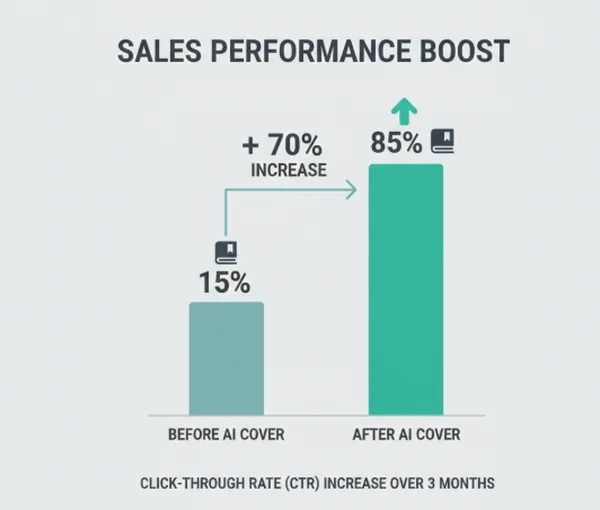
The most convincing part of these success stories is the data. Many authors are skeptical that a machine can create a unique book cover design that actually sells. However, the metrics tell a different story.
Quantifying Success: Sales Metrics and Conversion Rates
When we talk about "success," we usually look at the conversion rate. This is the percentage of people who click on your book and then actually buy it. If your book has a great description but a bad cover, your conversion rate will be low. This is because people won't click in the first place.
Authors using AI-generated covers have reported a 20% to 50% increase in their Amazon "click-through rate" (CTR). This means hundreds more people are clicking on the book than before. For a full-time author, this jump in traffic can mean the difference between a hobby and a career.
Market Testing: How AI Designs Competed with Traditional Designer Covers
Some authors have even performed "A/B tests." They run ads for the same book using two different covers. One comes from an expensive human designer. The other is created using BookCoverDesign.ai.
Surprisingly, the AI covers often perform just as well. Sometimes they even perform better than traditional designs. Why? The AI is purely focused on market-aware styles. It does not have an "artistic ego." It simply generates what works for the current market. When you use this tool, you are using a database of successful design logic to build your brand.
Long-Term Benefits: Building a Consistent Author Brand
Success is not just about one book. It is about a career. One of the biggest advantages of using an AI book cover generator is the ability to create a "brand look" across a series. David Miller used the same style settings for all his books. This created a cohesive visual identity.
When a reader finishes Book 1 and sees Book 2 with a similar design, they instantly recognize it. This consistency builds trust and encourages "binge-reading." Binge-reading is the secret to long-term profitability in self-publishing.
Your Turn to Create Your Success Story with AI
These aren't isolated cases—authors across genres are finding similar success with AI-generated covers daily. What makes their stories compelling is how accessible professional design has become. You don't need a massive budget to have a professional book cover design. By focusing on color, typography, and composition, you can give your book the competitive edge it deserves.
Whether you are writing your first novel or your tenth, a high-quality cover is the best investment you can make. It protects your hard work and ensures your voice is heard. Don't let a poor design hold you back from your potential as a successful author.
Are you ready to see your book on the bestseller charts? You can start designing now and join the thousands of authors who have found success through the power of AI.
The Takeaway
Can AI-designed book covers really compete with human designer quality?
Yes, they can. While human designers offer a personal touch, AI tools like BookCoverDesign.ai use algorithms trained on millions of data points. They understand what readers actually like. For most genres, the quality is indistinguishable from professional human work. It also comes at a fraction of the cost and time.
How quickly can I see results after implementing a new book cover design?
Many authors see a change in their "click-through rate" within 48 to 72 hours of updating their cover. If you are running paid advertisements, the results are often visible even faster. You will likely see your "cost per click" drop as the new cover attracts more interest.
What genres benefit most from AI-generated cover designs?
Genres with strong visual conventions benefit the most. This includes fiction book cover design for genres like Sci-Fi, Fantasy, Romance, and Thrillers. It also works exceptionally well for non-fiction book cover design. Clean layouts and professional typography are key to establishing authority in non-fiction.
How much does using AI for book cover design actually impact sales?
While every book is different, a professional cover is the #1 factor in a reader's decision to click. Authors in our case studies reported sales increases ranging from 30% to over 100%. You can see your results by trying a new design for your current or upcoming project today.