
Book Cover Design Mistakes Authors Make (And How AI Fixes Them)
Your book deserves to be judged by its content, not its cover. However, in the real world, the opposite is true. Countless self-published authors unknowingly sabotage their success with amateurish cover designs. These failures prevent books from attracting readers or representing years of hard work. In today’s competitive publishing landscape, your book cover is often the first—and only—chance to make a lasting impression.
Is your current cover design actually pushing readers away? Many authors spend years writing their masterpiece only to rush the final step. A poor design signals to the reader that the writing inside might also be low-quality. This article reveals the most common book cover design mistakes that kill book sales and shows how AI technology can help you avoid these pitfalls.
By using an AI book cover generator, you can maintain creative control while ensuring your book looks like a bestseller. Ready to begin? Let’s look at the common errors and how to fix them instantly.
Poor Text Legibility and Font Selection Mistakes
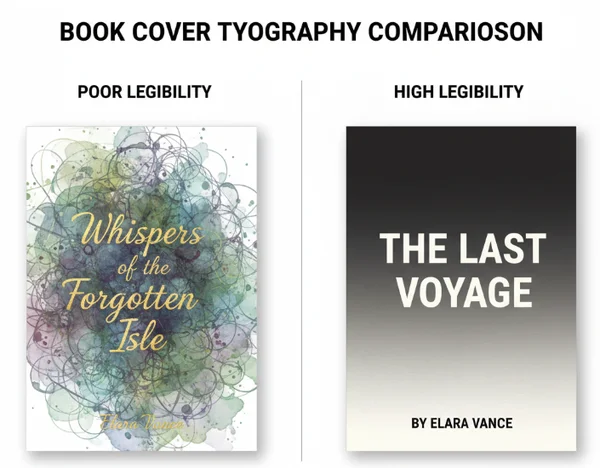
One of the most frequent mistakes in DIY design is choosing the wrong fonts. Authors often pick fonts that look "cool" or "fancy" on a large screen. However, they forget that most readers view books as tiny thumbnails on Amazon or mobile devices. If the title is hard to read at a glance, the reader will simply keep scrolling.
Why Readable Typography Is Critical for Book Sales
Typography isn’t just font selection. It’s about visual hierarchy and clear communication. The title of your book needs to pop. If you use a thin, script font on a busy background, the letters will disappear. Furthermore, if the spacing between letters is too tight, the words become a blur.
In the world of professional publishing, the title should usually be the most prominent element. When typography is handled poorly, the book looks "home-made." Readers associate professional typography with high-quality storytelling. If you want to design a book cover that sells, you must prioritize clarity over decoration.
How AI Automatically Ensures Text Readability
This is where artificial intelligence changes the game. Modern AI tools are trained on thousands of successful book covers. When you use an AI book cover design tool, the system understands contrast and placement. It doesn't just "place" text. Instead, it analyzes background colors and textures to ensure the font stands out.
AI can suggest font pairings that work harmoniously. For example, it might pair a bold serif font for the title with a clean sans-serif for the author’s name. This creates a professional look without you needing a degree in graphic design. AI prevents you from making the "invisible text" mistake that plagues so many indie authors.
Generic Imagery That Blends In
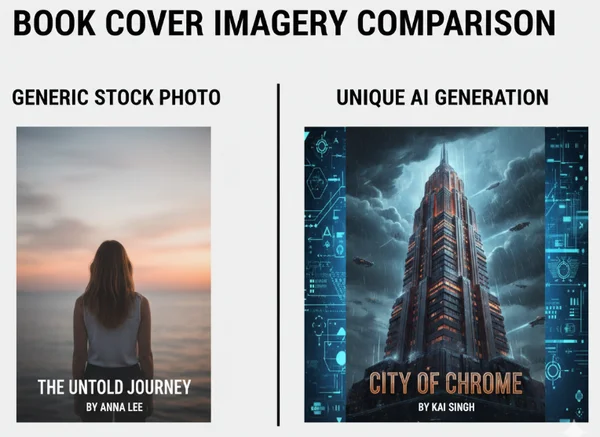
The second major mistake is using generic stock photos that have been used a thousand times before. We have all seen the same "lonely person on a cliff" or "mysterious woman in a red dress" on dozens of different novels. When your imagery is generic, your book blends into the background of a crowded marketplace.
Standing Out in a Crowded Market with Unique Visuals
To capture a reader's attention, you need unique book cover design elements. Your cover should tell a story before the reader even opens the first page. Boring or cliché visuals lead readers to assume the story is equally predictable.
Standing out doesn't mean your cover has to be loud or neon. It means the composition and the subject matter should feel fresh. A unique visual creates curiosity. It makes a reader pause their scroll and think, "What is this book about?" If you cannot afford a custom illustrator, AI offers a professional third way.
How AI Generates Custom, Genre-Specific Graphics
AI allows you to move beyond the limitations of stock photo libraries. Instead of searching for a photo that "mostly" fits your book, you can use an AI book cover generator to create exactly what you imagine.
By entering a detailed prompt, you can generate custom graphics specific to your characters, setting, or mood. Whether you need an "Art Deco skyscraper in a dystopian city" or a "minimalist watercolor of a single broken key," AI can build that image from scratch. This ensures that no other book on the shelf looks exactly like yours. You have the power to create a book cover that is truly one-of-a-kind.
Mismatched Cover and Genre Expectations
Perhaps the most "expensive" mistake an author can make is a genre mismatch. This happens when a thriller looks like a cozy romance, or a non-fiction business book looks like a sci-fi novel. If a reader clicks on your book expecting one thing and gets another, they will feel deceived. This leads to poor reviews and high bounce rates.
Understanding Genre Conventions in Cover Design
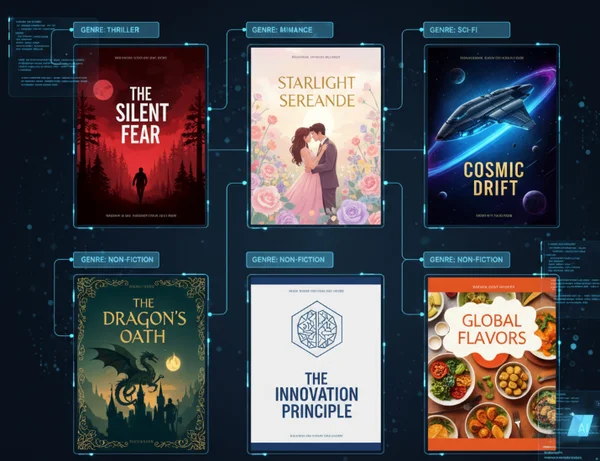
Every genre has a "visual language." Readers use these codes to find the stories they love.
- Thrillers often use high contrast, dark blues, and sharp typography.
- Romance often uses softer pastels, elegant scripts, and emotional imagery.
- Non-fiction relies on clean layouts, plenty of white space, and authoritative fonts.
Ignoring these conventions is a mistake. While you want to be unique, you must stay within the boundaries of your genre. This helps readers know exactly what they are buying. When designing a book cover, you must respect the expectations of your target audience.
How AI's Genre-Specific Templates Prevent Misalignment
Our AI book cover generator features MarketAware Styles. The system is programmed to understand these genre conventions automatically. When you select a style like "Abstract and Symbolic," the AI applies the color palettes and compositions that readers in those categories already trust.
Instead of guessing which colors represent mystery, you can let the technology guide the process. These design decisions are based on market data and successful publishing trends. This ensures your cover looks both professional and appropriate for your specific niche.
Ignoring Technical Specifications for Print and Digital
Even a beautiful design can be ruined by technical errors. Many authors design a cover that looks great on their screen but fails during the actual publishing process. This is the "hidden" mistake that often causes the most frustration during a book launch.
Common Technical Errors That Compromise Professional Quality
A professional cover blends art with precision. Ignoring technical details undermines both. The most common technical mistakes include:
- Low Resolution: Using images that look blurry or pixelated when printed.
- Wrong Aspect Ratio: Designing a cover that is too wide or too narrow for Kindle standards.
- Bleed and Margin Errors: Placing important text too close to the edge where it might be cut off.
- Color Mode Mismatch: Designing in RGB for screens but printing in CMYK, which makes colors look dull.
These errors make your book look amateur and can lead to file rejection by platforms like Amazon KDP. If you want a professional result, you cannot ignore the math behind the art.
How AI Automatically Adapts to Different Format Requirements
Using a dedicated AI book cover generator solves these technical headaches automatically. When you select a size like "Kindle (1600 × 2560 px)," the tool ensures the output is perfectly scaled.
The AI handles high-resolution requirements by providing sharp JPG or PNG files. These are ready for both digital distribution and high-quality printing. You don't need to be a technical expert or understand pixel density. You simply choose your preferences, and the tool ensures your designs meet industry standards every single time.
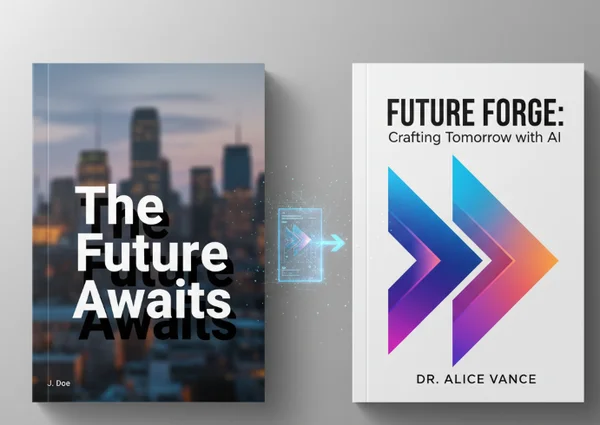
Transform Your Book's First Impression with AI Design Intelligence
Creating a book cover used to require either expensive software skills or a massive budget. Because of this, many authors fell into the traps of poor typography and technical failures. Today, those barriers no longer exist.
Avoiding these pitfalls ensures your book stands out—no design degree required. You now know that legibility is key, uniqueness matters, and technical specs cannot be ignored. A great story deserves a cover that matches its brilliance. Start designing yours today and give your book the professional image it deserves.
The Takeaway
How do I know if my book cover design is effective?
An effective cover passes the "three-second test." If a reader can identify the genre and read the title within three seconds of looking at a thumbnail, the design is working. You can also test your design by using an AI book cover generator to create several versions for target readers to review.
Can AI really design better covers than human designers?
AI is a powerful tool for designing a book cover quickly and affordably. While high-end human designers are excellent for complex, custom projects, AI is often better for authors on a budget. It bridges the gap between DIY efforts and expensive agency costs.
What makes a good book cover design for self-published authors?
A good cover must be high-resolution, genre-appropriate, and visually striking at a small size. It should use clear typography and professional color themes. To get started, you can explore various book cover design ideas on our homepage to see what fits your story best.
Is AI-generated art legal for my book cover?
Yes, tools like our AI book cover generator are designed to help you generate unique assets for your publishing needs. AI-generated designs provide a way to get unique elements that are not simply copied from existing stock libraries, giving you more creative freedom.
What is the best file format for a book cover?
For digital platforms like Kindle, a high-quality JPG or PNG is standard. For print, you often need high-resolution files that meet specific pixel dimensions. Our platform allows you to see your results in the correct formats automatically, ensuring you never have to worry about technical rejection.